
Culinary Arts

Become a chef, cook, host, or customer service-oriented professional.

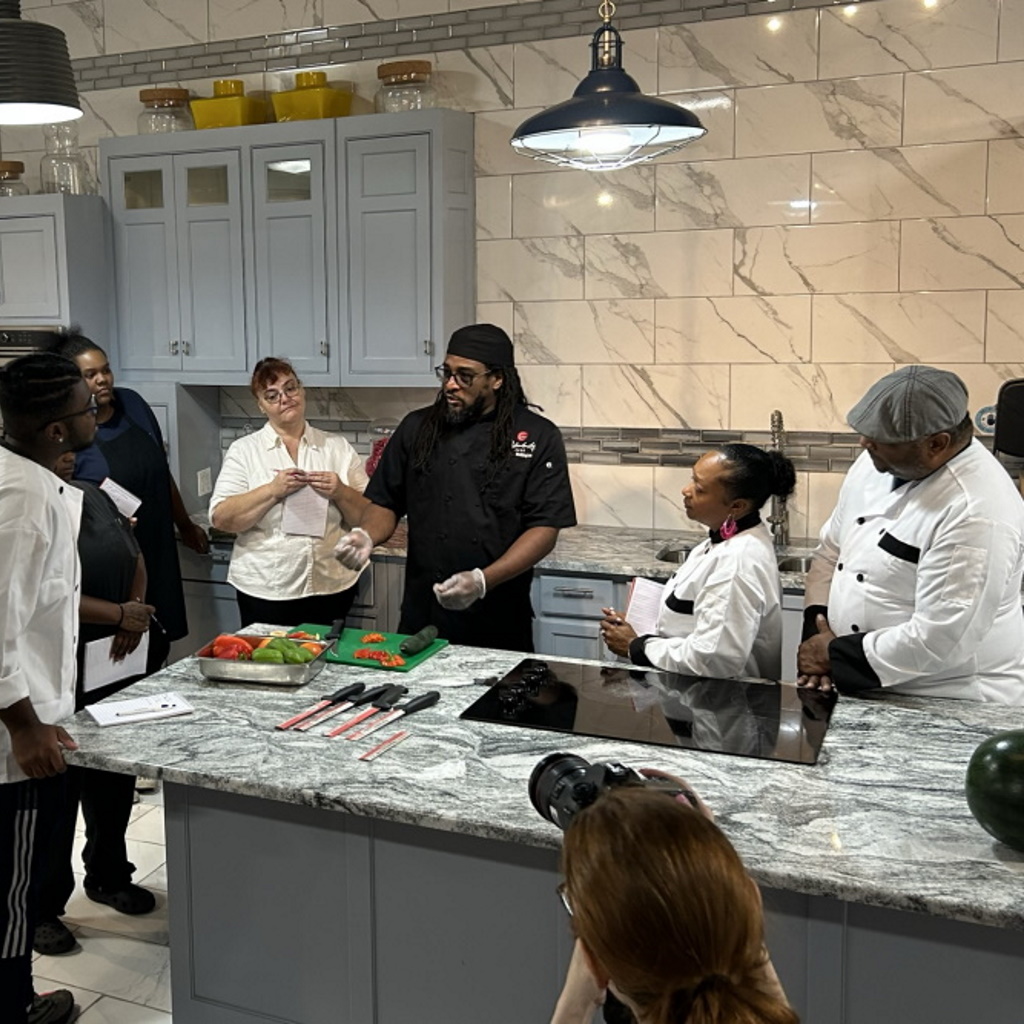
The Culinary Arts program is an immersive 13-week course designed to prepare students for careers in the culinary and food service industries. Combining foundational theory with practical training, the curriculum introduces key topics including food safety and sanitation, kitchen tools and terminology, knife skills, cooking methods, recipe development, international flavor profiles, and baking. Students explore stocks, soups, sauces, meats, and cost control. The final phase includes a café internship to build real-world experience, capped by a formal graduation dinner prepared and served by students.

Class Minimum: 10, Class Maximum: 12

Instructional Format

Students are evaluated through quizzes, practical activities, and a final performance-based review during their internship. Upon completion, graduates are equipped with the knowledge and hands-on skills required to seek employment in commercial kitchens, catering operations, or to pursue further culinary education.

Course Schedule

  • Program Duration: 8 Weeks (4 weeks add’l. for internship + 1 final exam)
  • Clock Hours: 240 Hours (60 Lecture, 180 Lab)
  • Weeks 1–3: Foundational Knowledge (60 Lecture Hours)
  • Weeks 4–12: Practical Culinary Training (180 Lab Hours)
  • Weeks 9–13: Café Internship & Professional Development

Note: Weeks 9 through 12 are dedicated to a structured internship in a real-world café or food service setting. Students will apply practical kitchen and customer service skills in a professional environment. This internship serves as the culmination of the program’s hands-on training. The final evaluation of the student’s performance, including professionalism, consistency, skill execution, and communication—is conducted during and at the conclusion of this internship phase. Completion of all internship activities and a satisfactory final evaluation are required to pass the course.

Topics Covered:

  • Program overview and expectations
  • Food safety principles and best practices
  • Health code compliance

Student Activities:

  • Food Safety and Sanitation Training
  • Food Safety Test
  • Health Department Food Safety Certification & ID Card

Topics Covered:

  • Overview of culinary career paths
  • Workplace safety principles
  • Self-empowerment and goal setting

Student Activities:

  • Culinary Careers Quiz
  • Safety Principles Quiz
  • Goal Setting Exercise

Topics Covered:

  • Kitchen Equipment Identification (Large, Small Appliances, and Utensils)
  • Kitchen Terms and Etiquette
  • Food Qualifiers (shapes, quantities, hand measures)
  • Cooking Measurements Overview

Student Activities:

  • Equipment and Utensils Quiz
  • Kitchen Terms Quiz
  • Food Qualifiers Quiz
  • Field Trip

Topics Covered:

  • Food measurement practices
  • Knife types, anatomy, handling and safety
  • Basic knife cuts
  • Introduction to cooking methods

Student Activities:

  • Vegetable and Fruit Prep
  • Knife Maintenance
  • Measurement Quiz
  • Recipe Scavenger Hunt (must include 3 cooking methods)

Topics Covered:

  • Recipe formats, yields, and conversions
  • Types of stocks and soups
  • Clarified and compound butters

Student Activities:

  • Recipe Calculation Quiz
  • Stock and Soup Preparation
  • Clarified & Compound Butter Creation
  • Knife Cuts and Skills Test

Topics Covered:

  • Elements of a complete recipe
  • Five Mother Sauces
  • Recipe costing methods and tools

Student Activities:

  • Recipe Elements & Ingredients Quiz
  • Kitchen Costing Exercise
  • Mother Sauce Quiz

Topics Covered:

  • Regional Flavor Profiles: African, Asian, European/Mediterranean, Latin American, Middle Eastern/Indian
  • Herb and Oil Identification and Use

Student Activities:

  • Country Flavor Profile Research & Presentation
  • Create Herb Packets
  • Field Trip
  • Guest Chef Demonstration

Topics Covered:

  • Common meat types and safe handling
  • Pathogens in meats
  • Beef grading and popular cuts
  • Seasoning pairings for proteins
  • Intro to Baking

Student Activities:

  • Meat Variety Review
  • Ground Hamburger Creation from Beef Cut
  • Seasoning Pairing Lab
  • Hamburger Cooking Competition
  • Basic Baking Introduction
  • Students begin hands-on rotation in on-site or partnered café
  • Focus on foundational baking techniques
  • Practical work in guest-facing roles
  • Communication, efficiency, and professional kitchen demeanor
  • Crafting a culinary resume
  • Personal branding for the food industry
  • Interview skills workshops
  • Mock interview exercises with industry professionals
  • Students plan, prepare, and execute a formal graduation dinner event
  • Focus on menu design, execution, plating, and service

Program Completion

  • Food Safety Certification
  • Hands-on experience with culinary techniques and recipes
  • Internship-based training in a café environment
  • Professional resume and interview preparation
  • Completed a capstone graduation dinner event
  • Skills to begin entry-level employment or advanced culinary training

Tuition & Fees

  • Tuition:  $7,200
  • Admin Fee:  $150
  • Supplies:  $250
  • Total:  $7,600